Does therapy actually work or is it just a bunch of hoity-toity bullshit for rich people who want to complain to a stranger about their problems?
Myths and stereotypes abound about talk-based therapy.
People think that therapists ‘shrink’ heads. Or that therapy clients are simply ‘navel-gazing’.
But does sitting down and talking to someone actually move your life forwards, or is it just self-absorption masking as self-development?
What Does Therapy Actually Do For People?
I am of the belief that life will eventually humble you and give you the lessons that you need to learn within your lifetime.
Are you supremely arrogant? Life will teach you humility.
Are you overly selfish and self-centred? Life will teach you compassion, empathy, and awareness of others.
Are you perpetually putting others needs before your own? Life will teach you to step into your power and make your needs a priority.
But, while I believe that your lessons are inevitable and they will come your way in time, I also believe that therapy is a way of earning your way into these higher states of existence sooner, rather than later.
In other words, you can shave years (if not several decades) off of your learning curve by having someone be a potent mirror to you and give you valuable reflections that you might not have come across until your later years in life. These little interventions are achieved by someone (who lives outside of your mind) giving you potent reflections regarding blind spots that you wouldn’t have been aware of otherwise.
So speed of integration of your life’s lessons (how soon it happens) is one major benefit of therapy, and the second most important is a question of dynamic range (or how much you change over time with your newfound self-awareness).
Let me draw an analogy (both literally and figuratively) that will better explain this concept…
Whenever I release an article on my website that I am especially proud of, I occasionally pay for a ‘boost’ on my Facebook fan page in order to give the article extra reach. Why would I do this? Because the total impact of the article (in terms of world-wide readership) is exponentially different when I give the beginning just a little bit of a boost.
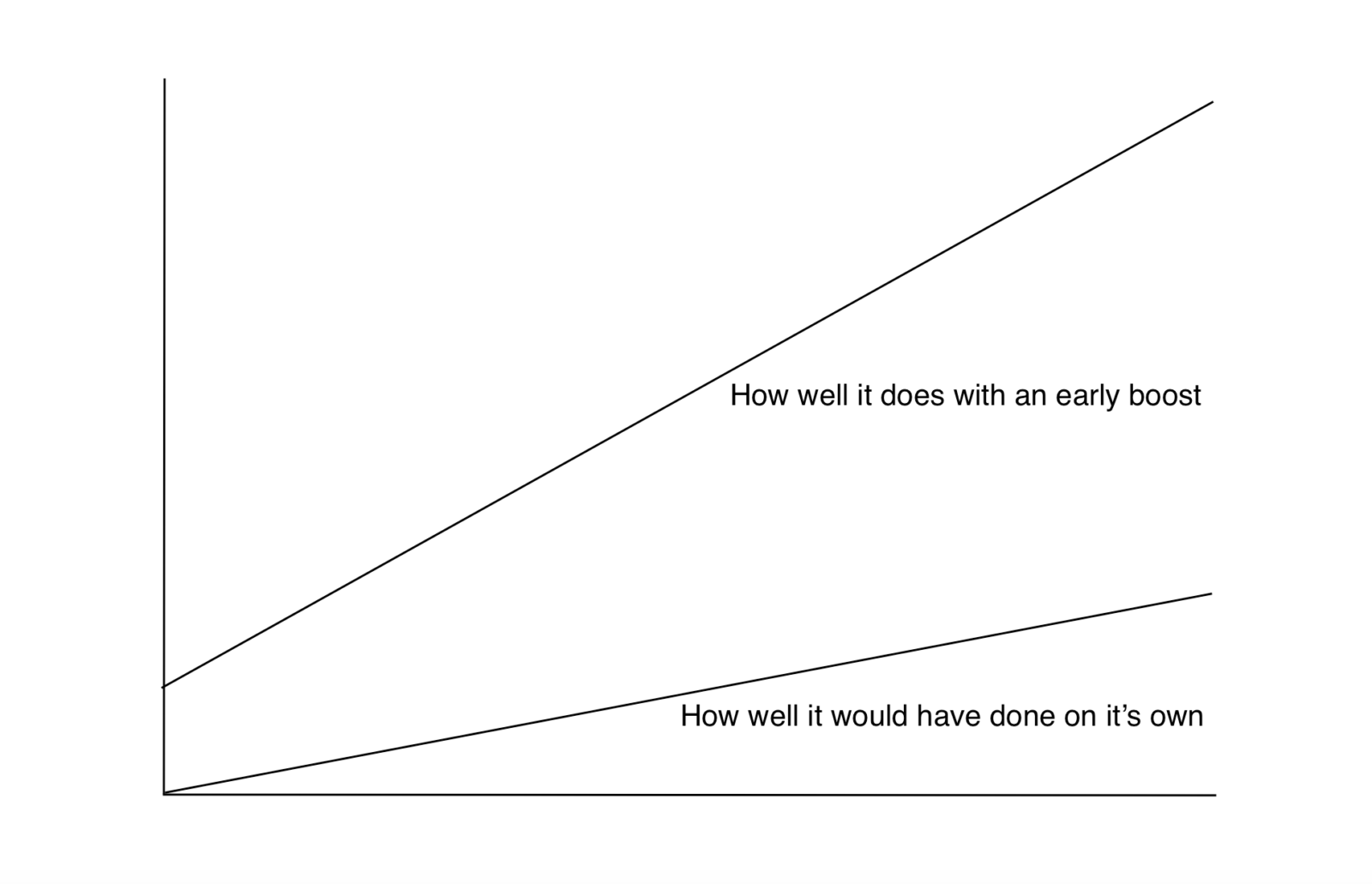
It’s the same with seeing a therapist, doing group therapy, or any other kind of reputable deep inner work in your life.
The results that you see in the future are exponentially greater because you have the increased self-awareness, character, and greater toolkit of emotional resilience than you would have if you had never slowed down to spend some time working with and being aware of your patterns and your mind.
Now, when I say reputable, that is an important element in this whole debate.
There are countless therapists, coaches, counsellors, etc. who are ineffective (and often damaging).
I once had a client tell me (after our single coaching session regarding his intermittent erectile dysfunction) that I had been more helpful to him than dozens of sessions that he did with a licensed sex therapist who more or less told him that he would have this problem forever and there was very little he could do about it (he wasn’t inspired by this feedback, to say the least). Of course this isn’t to say that all sex therapists are ineffective (not at all – I know some truly gifted providers), but that the range of quality among different therapists is vast.
There is no tried and true method to figuring out who is amazing and who isn’t before doing a session with them, but a good rule of thumb is to either 1) ask people you respect for referrals, or 2) to look at the service providers testimonials and see if the transformations of the people that they have worked with are similar to what you are going through.
Final note on this: if a therapist/coach/counsellor ever tells you that they can “fix you”, run in the other direction. It is not a therapists job to fix you, but merely to help you to fix yourself. Fix is a crude word to use (help you to integrate would be more appropriate), but the word choice is intentional in this instance because some younger, more inexperienced therapists can get a bit of a god-complex and believe that they are the ones doing the healing for the client.
Does Therapy Work For Everyone?
Is talk-based therapy a silver bullet that works for everyone? Of course not. But it’s the closest thing to one for most people that I’ve ever seen and utilized.
The simple value that is derived from allowing yourself to be seen, allowing your pain to be heard, witnessed, and received, and the emotional freedom that results from you moving forward in your life with a more robust and dynamic sense of self, is immense and incalculable.
Dedicated to your success,
Jordan
Ps. If you enjoyed reading this article, you will likely also love:
– How To Fully Release Difficult Emotions That Hold You Back
– All Of Your Suffering Was Worth It
– 11 Easy Ways To Actually Love Yourself More
– What The Most Compassionate People All Have In Common
– How To Manage Stress (Or How I Effectively Weathered My Shit Storm Of A Year)